

If you have basement windows with window wells, you already know how much they help. A window well lets natural light reach the basement window and keeps moisture and soil away from the foundation wall.
Left alone, though, a well becomes a magnet for leaves, dirt, and small animals looking for a sheltered spot. Regular window well cleaning is about more than looks. It prevents water damage, keeps pests out, and stops drainage problems before they reach your basement.
This guide walks through window well cleaning step by step, then covers how to keep animals and leaves out of your wells for good.
Why Cleaning Window Wells Matters
Debris, water, and pests build up in a window well over time. When that buildup is left alone, it can lead to problems like these:
- Blocked drainage: When leaves and dirt clog the well drains, excess water has nowhere to go. Water buildup against the window can lead to basement leaks or even basement flooding, which is why keeping drains and gutters clear is one of the simplest ways to protect your home.
- Unwanted visitors: Small animals may settle into the well and damage windows and screens.
- Mold and mildew: A damp, dirty well is an easy place for mold to grow. The EPA notes that moisture control is the key to mold control.
- Moisture damage: Excess moisture can rot wood components like the window frame and window trim, and lead to long-term problems with the surrounding structure.
With proper maintenance, window well cleaning is a quick job instead of a dreaded chore.
How to Clean a Window Well
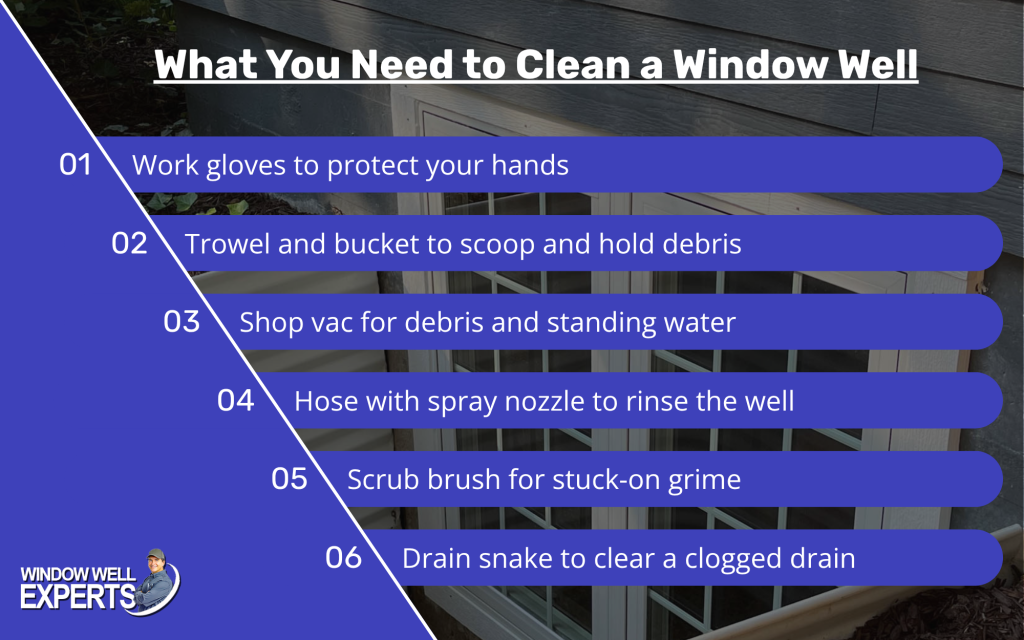
Step 1: Gather Your Supplies
Gather the right tools before you start so you can finish the job in one pass.
Supply | Why You Need It |
Work gloves | Protect hands while clearing debris |
Small shovel or garden trowel | Scoop out dirt, mud, and gravel |
Bucket or trash bag | Hold debris as you clear it |
Wet/dry shop vacuum (optional) | Pull up smaller debris and standing water |
Hose with spray nozzle | Rinse dirt off walls and the window |
Scrub brush | Work through stuck-on grime |
Drain snake | Clear a clogged drain if needed |
Step 2: Remove All Debris
If your window well has a cover, remove it first. Put on your gloves and pull out large debris like leaves, twigs, and trash that may have blown in. Use your small shovel to scoop out any dirt, mud, or gravel buildup, then run a rake or use a shop vacuum over the bottom of the well, if desired, to pick up smaller debris and standing water.
Step 3: Check the Drainage
Many window wells have a drainage system designed to move water away from your foundation. If you notice water pooling at the bottom of the well after heavy rain, the drain may be clogged.
To test this, pour a bucket of water into the drain and watch the water flow. If it drains quickly, the drain is working. If water pools instead of draining, use a drain snake to clear the blockage, then test it again.
Step 4: Scrub the Window and Well Walls
If you can use a stiff brush to remove loose dirt, do so, otherwise using caution, use a hose with a spray nozzle on low pressure to rinse loose dirt off the window and the well walls. For stubborn grime, scrub with a brush and soapy water, paying attention to the corners and the edge along the window sill. Rinse everything thoroughly when you’re done, using the smallest amount of water possible to get the job done, to speed drying time
Step 5: Refresh the Gravel
Over time, the gravel bed at the bottom of the well gets compacted and packed with dirt, which slows drainage. If your gravel layer looks muddy or packed down, remove it down to about 6 inches below the window sill. Then replace it with fresh gravel up to about an inch below the sill.
Fresh gravel supports proper drainage and gives the well a cleaner look from inside the basement. It also helps keep the window cleaner from the outside.
Step 6: Let It Dry
Give the well time to dry completely before putting a cover back on. Trapping moisture under a cover can let mold and mildew start growing again. This is also a great time to caulk the seam between the well and the foundation wall if there is none or repair or replace the existing caulk if needed.
Keeping Animals Out of Window Wells
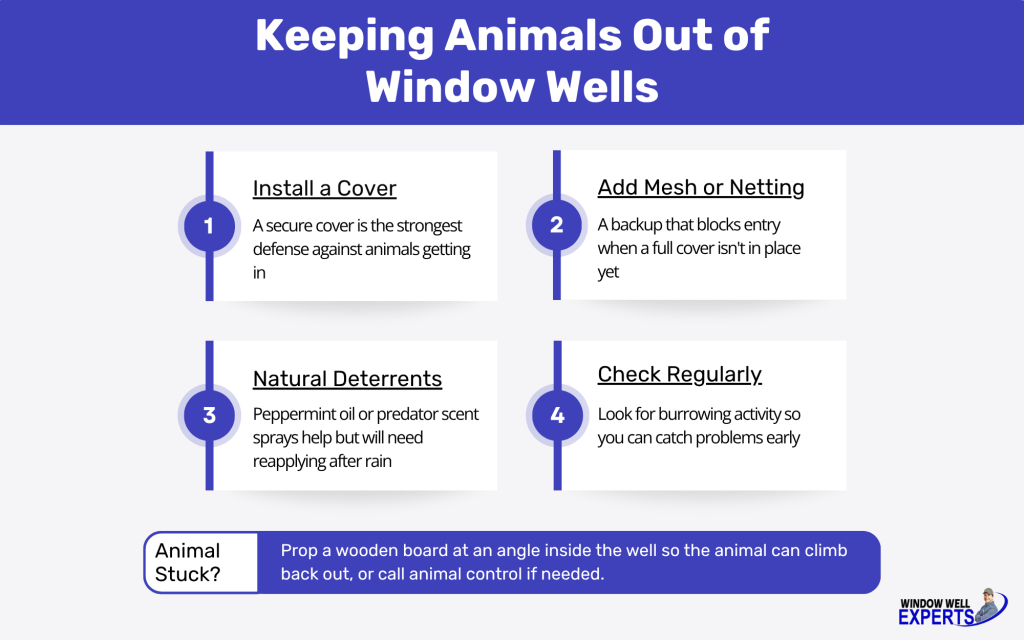
Finding an animal in a window well is unpleasant for you and dangerous for the animal. A few simple steps keep them out.
- Install a secure cover: A window well cover that fits securely is the strongest defense against animals. It blocks access while still letting water drain away from the house.
- Use mesh or netting as a backup: If a full cover isn’t in place yet, mesh or netting around the well blocks entry points and still allows airflow.
- Try natural deterrents: Some homeowners use peppermint oil, cayenne pepper, or predator scent sprays to keep animals away. These need to be reapplied, especially after rain. Keep your windows closed when spraying, since predator sprays have a strong smell.
- Check regularly: Inspect your wells for signs of animals or burrowing activity. If an animal gets trapped, prop a wooden board at an angle so it can climb back out, or call animal control if needed.
- If you do have animals in your window well: If it’s an animal (like a cat) that you feel comfortable handling, wear leather gloves to remove the animals. If the well is deeper or you are not going to handle the animal (like a raccoon or a skunk), put a board crosswise in the well that the animal can use to climb out. If they are not inclined to leave your nice, cozy window well, put a very bright light, like a worklight in your well and they will move out. If none of this works, call an animal control company. Cover your well immediately!
Keeping Leaves Out of Window Wells
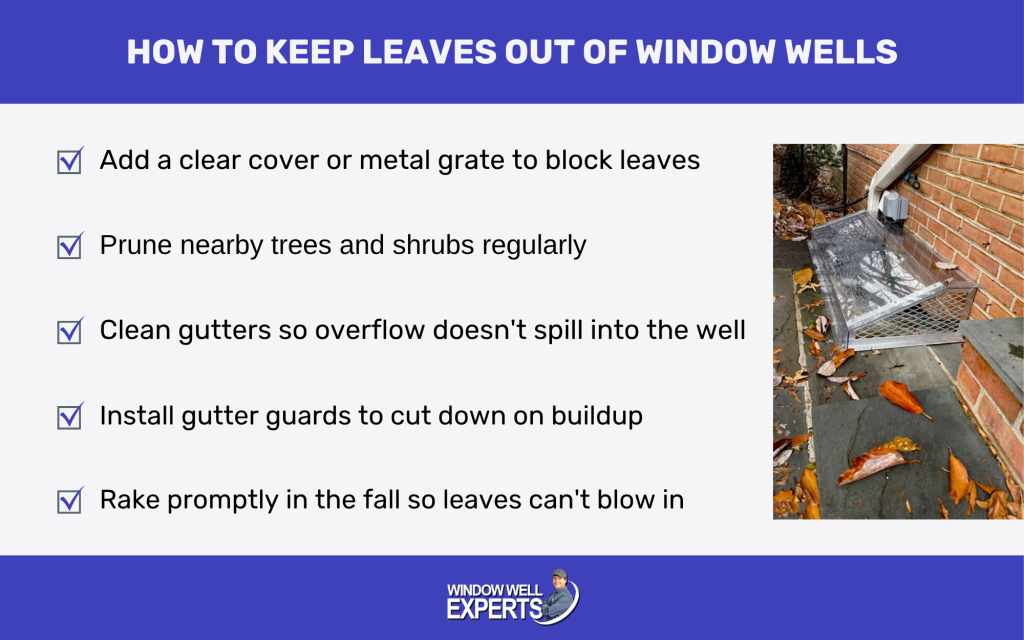
Leaves are one of the main reasons well drains clog. These steps keep them from piling up.
- Add a clear or mesh cover: A clear cover or a metal grate blocks leaves before they collect in the well. Clear covers let natural light through, and grates keep air moving. If you have a metal grate, a clear plastic top cover snaps on to keep rain out and lifts off for ventilation.
- Prune nearby trees and shrubs: Trimming branches near your window wells cuts down on what falls in.
- Clean gutters and downspouts: Overflowing gutters send extra leaves, debris, and water into the well.
- Install leaf guards: Gutter guards reduce the buildup that feeds into the well and its drain.
- Rake promptly in the fall: Clearing leaves around the yard keeps them from blowing into the wells.
Long-Term Window Well Maintenance
A few quick checks throughout the year keep your wells in good shape between cleanings.
- Check covers each season: Look for cracks or gaps, and make sure each cover still sits securely on the well.
- Inspect drainage after heavy rain: Spring storms, heavy rain, and melting snow are good times to confirm water isn’t pooling in the well.
- Point downspouts away from the well: Directing runoff away from the house, and keeping the surrounding soil sloped away at ground level, helps prevent water buildup around the well.
- Add a layer of stone: A layer of stone at the bottom of the well helps drainage and cuts down on mud.
- Use outdoor-safe insect repellent: A light application keeps spiders and bugs from settling in.
Window Well Experts: A Complete Solution
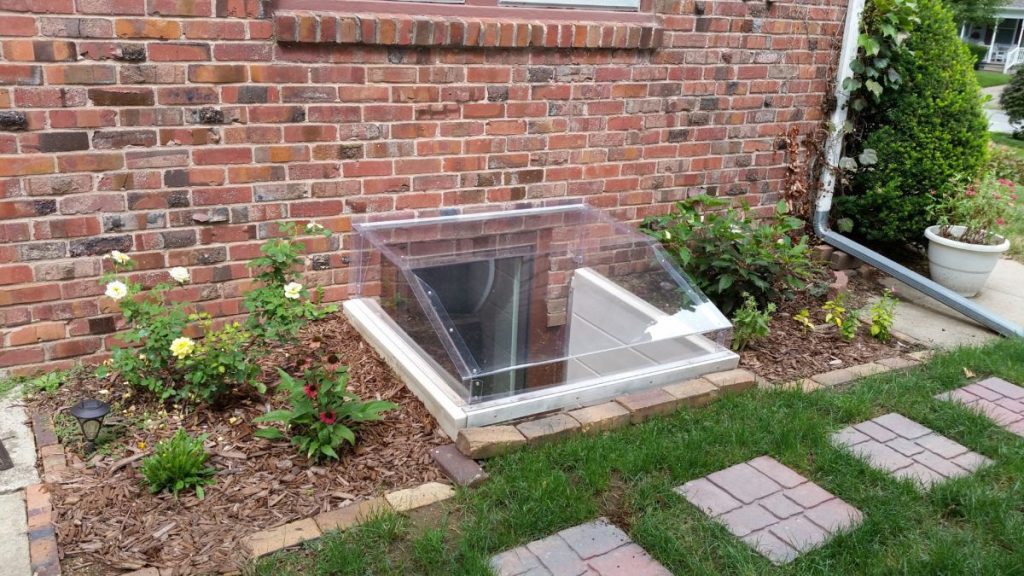
Cleaning keeps a window well in good shape, but a cover sized to your well is what keeps it clean between cleanings. With rain, snow, leaves, and animals kept out, each future cleaning becomes a much smaller chore.
Window Well Experts has supplied window well covers, window wells, egress kits, and accessories for over 50 years, serving more than 50,000 customers across the United States and Canada. Every cover is built to your window well’s measurements, including custom cover options for unusual shapes and oversized wells, and ships anywhere in the continental United States to your home or job site. Options like sloped, flat, and bubble covers are made from high-quality material that handles rain, snow, and changing weather conditions.
Ready to protect your basement window wells? Request a free estimate or call 1-888-650-9355 to talk with an expert.