
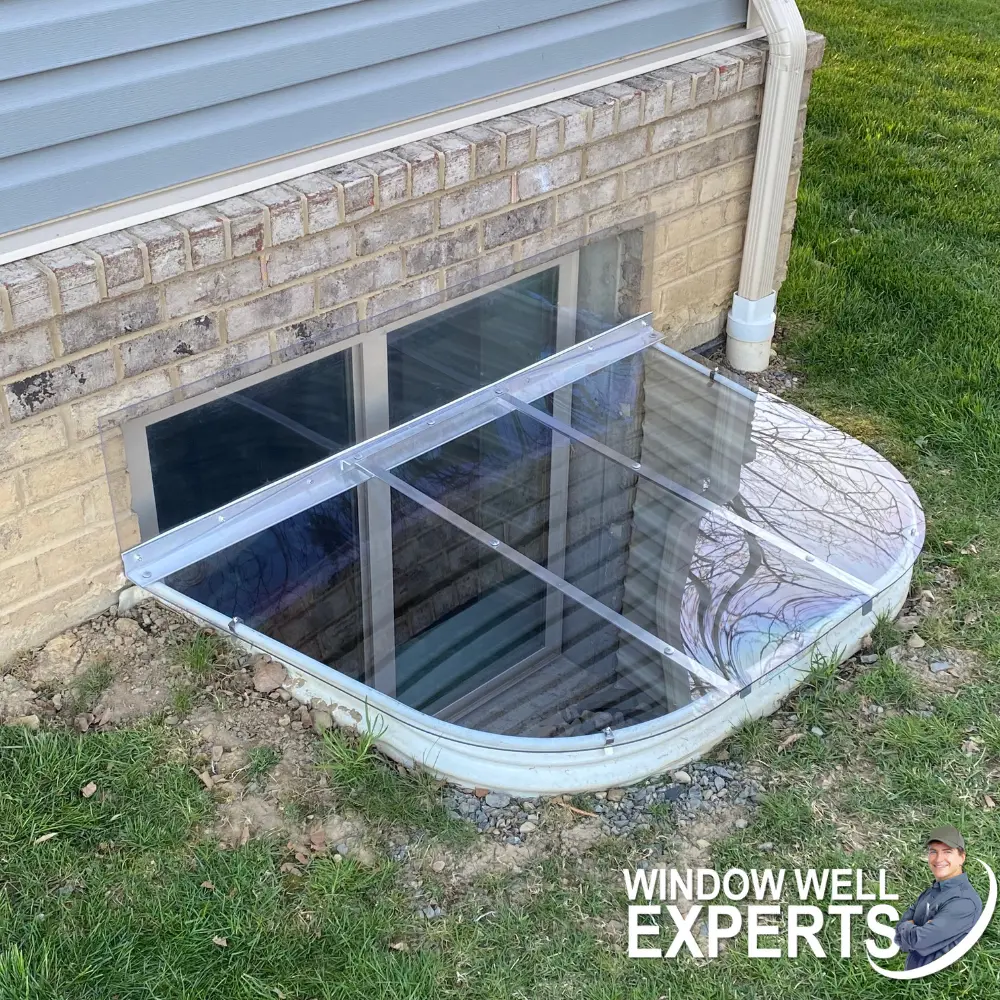
A basement window well gives your lower level something it probably lacks right now: natural light, fresh air, and a reliable emergency exit. If you are finishing a basement or adding a bedroom below ground level, building code in most areas requires at least one egress window with a properly installed well. Beyond code compliance, a basement egress window well installation increases your home’s resale value and turns unused square footage into real living space.
This guide covers the full basement window well installation process from planning and measuring to mounting and backfill maintenance. With clear steps and practical tips, you’ll be equipped to plan, order, and install a basement egress system that meets your needs and protects your peace of mind. Read on to discover how to make your basement brighter, safer, and fully compliant.
Before You Start: Plan Your Installation
Good planning prevents expensive problems. Before you order materials for your basement egress window installation, handle permits, utility checks, and measurements first.
Check Your Local Code and Permit Requirements
Egress code requirements can vary by state and municipality. The IRC code sets baseline minimums, but your local code may have additional rules. Review the egress code explanations, then confirm the details with your local building inspector. If you are installing a new window, keep in mind that cutting into the foundation typically requires a permit, so ask the inspector how long that process takes and build the timeline into your project plan.
To apply for your permit for a full egress kit installation, you may need to supply:
- A diagram of your home showing North and the planned location of the egress well
- A short description of the project scope, including the well, window, ladder (if applicable), and cover (if applicable)
Utility Check: Call your local Diggers Hotline, One Call, or Julie three to five business days before digging. On average, the utility markings are good for ten days.
How to Measure For Your Future Basement Window Wells
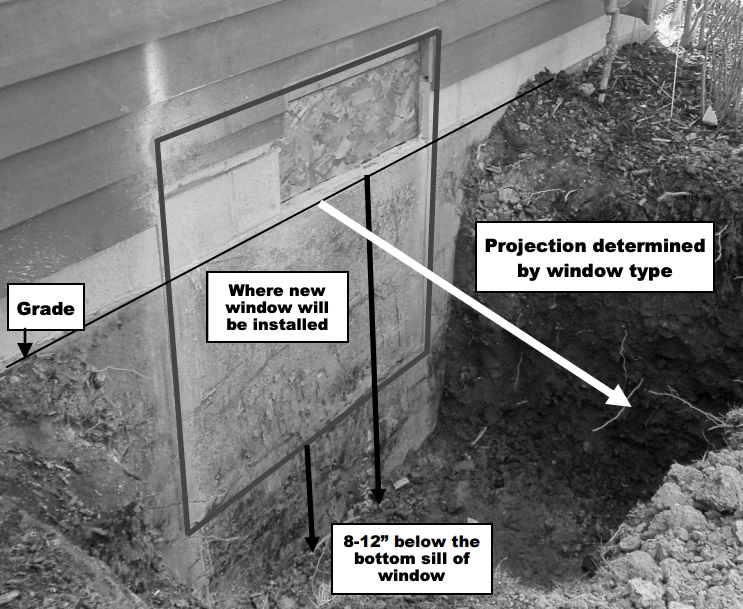
Accurate measurements help prevent expensive mistakes.
- The basement window well should be about 2 to 3 inches wider on each side of the existing (or planned) window rough opening for a mount-to-foundation installation.
- It should also be 8 to 12 inches deeper than the bottom of the window opening to allow for adequate drainage.
- The well should extend above grade about 3” to prevent water from washing over the top of the well.
- For a detailed walkthrough on how to take your measurements, check out the Window Well Experts measurement guide.
If you are cutting a new window opening into the foundation, make sure the opening meets the minimum size required by your local code for an emergency escape window. Under the IRC code, the minimum net-clear opening is 5.7 square feet at ground level, with a minimum height of 24 inches and minimum width of 20 inches. A larger window lets in more natural light, so consider going beyond the minimums if your foundation and interior wall space allows it.
Plan the natural escape path from the window and install the egress ladder accordingly. For most egress windows, installing the ladder on the front of the well is ideal, as the ladder is in plain sight in case of emergency. For either an inswing or crank-out window, put the ladder on the front of the well or on the opposite side from where the window opens.
5 Steps to Install a Basement Window Well

Step 1: Order Your Well and Accessories
Window Well Experts makes ordering simple. Call one of our team members at 1-888-397-8166 to discuss your project. We can help you choose the right well size and walk you through different options for basement windows, egress ladders, and window covers. If you want everything in one order, ask about our egress window kits, which bundle the well, window, and ladder and sloped cover in one easy shipment.
Plan for a 4 to 5 week lead time on wells. Everything ships directly to your door anywhere in the country.
Step 2: Dig the Hole
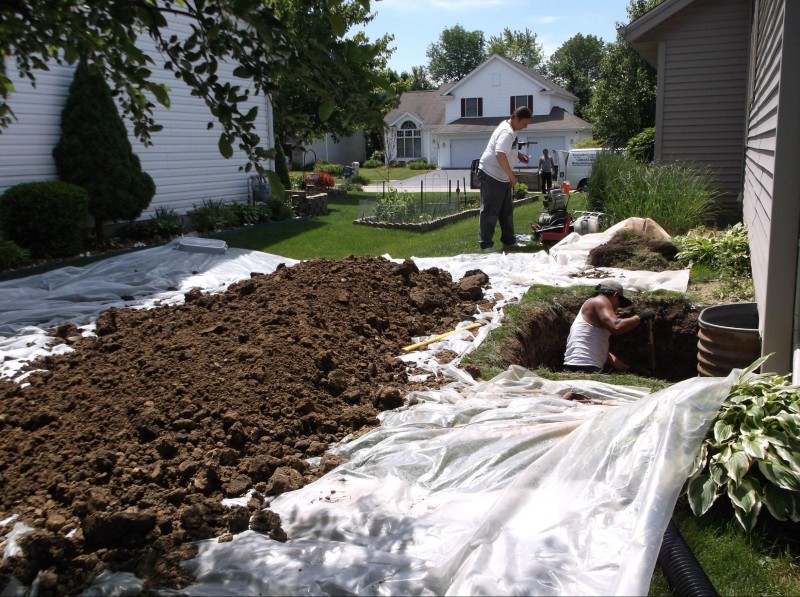
Depending on the depth of the well and your soil conditions, and your physical condition, you may be able to dig the hole by hand. A mini excavator can also be rented. After the hole is dug, if rain is expected, cover the hole with a heavy sheet of plywood and a tarp to ensure safety.
Sizing the excavation:
The hole for your egress installation needs to be at least 12 inches larger than the window well on all sides. This gives you room for drilling mounting holes and securing the well flanges to the foundation wall. The top of the well should sit at least 3 inches above ground level to prevent flooding. If the area is in a low spot, add more height above grade.
You may need to dig the center of the hole and additional 2 to 3 inches deeper at the bottom to connect to the existing drain tile (also called sump drain tile or weeping tile). If a french drain or other foundation drainage system is already in place, plan to tie into it for improved drainage. If your soil naturally drains well, a dedicated well drain my not be necessary.
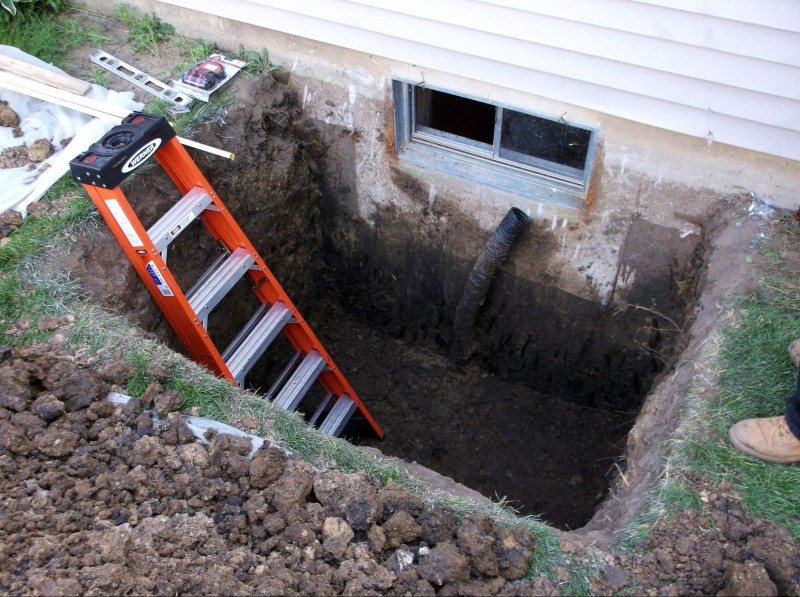
If manual digging is not practical, a mini excavator or backhoe is the best choice. These are available for rent, or you can hire someone with the equipment and the excavation experience.
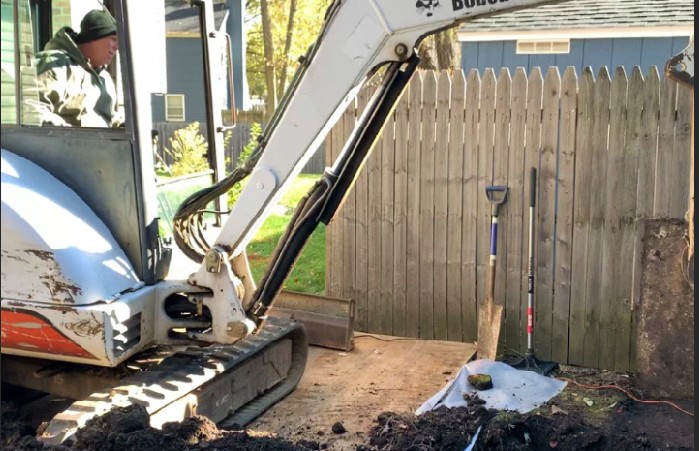
Pro Tip: Protect your lawn by laying down plywood and spreading tarps to hold the displaced dirt. This saves cleanup time and prevents damage to your grass.
Step 3: Attach the Well to the Foundation
Basement window wells that are not fastened to the foundation wall will shift over time and allow water to leak into the basement. Do not skip this step.
Caution: If you ordered an egress window kit with a cover, the well’s sidewalls may bend outward or toe inward from flexing during shipment. Double-check the mounting width against the specification size so the cover fits with an even overlap. Maintain symmetrical tapering back to the wall on each side when backfilling, and test-fit the cover onto the top of the well before you finish tightening the top bolt on each flange.
Positioning the well:
- The top of the well should extend 3 inches above the established grade line and reach at least 8 to 12 inches below the window sill.
- Position the well so you can build up dirt around the lip, allowing water to drain away from the foundation as shown in the photo below

Fastening the flanges:
- Attach flanges to the foundation wall at 12-inch centers (minimum) for structural integrity.
- Drill mounting holes with a 3/16-inch diameter masonry bit and remove all concrete dust.
- Apply a polyurethane caulk or sealant. Do not use self-leveling caulk, as it is too runny for this application.
- Use Tapcons or other appropriate fasteners sized 1/4 x 1-1/4 inches with large fender washers.
- On a masonry block wall or brick wall, use a wedge fastener instead of Tapcons.
If you already have a drain tile system installed around your foundation, it’s a good idea to connect a drain from the window well directly into it. This helps ensure that any water collecting in the well has a reliable path away from your foundation. Drain tile systems can vary in design, materials, and installation methods, so it’s important to know the specifications of your particular system or consult a professional to ensure the connection is made correctly.
Step 4: Backfill Around the Well
Shovel dirt back in evenly around the well in 12-inch layers, compacting each layer by hand as you go. This protects the structural integrity of the well and prevents the profile from becoming distorted. After the outside is filled, add decorative stone inside the well up to 2” below the bottom sill of the window for adequate drainage and support.
- Use backfill material that is free of hard lumps and large rocks
- Avoid heavy construction equipment near the wells after backfilling, as the weight and vibration can warp the well’s shape
- Egress ladders are recommended for any well with a 36” projection and are required for finished well heights greater than 42 inches
If an egress ladder is required, install the ladder for a natural escape path from the window.
Step 5: Compact and Maintain the Backfill
This step is critical. Many homeowners finish the installation and then forget about the backfill. Skipping ongoing maintenance can lead to flooding and well collapse.
After it rains, add compacted fill around the outside of the well and stomp the area down. Continue doing this regularly for at least 90 days. Keep adding compactable dirt or fill to maintain a raised berm that acts as a dam, directing water away from the well and your basement.
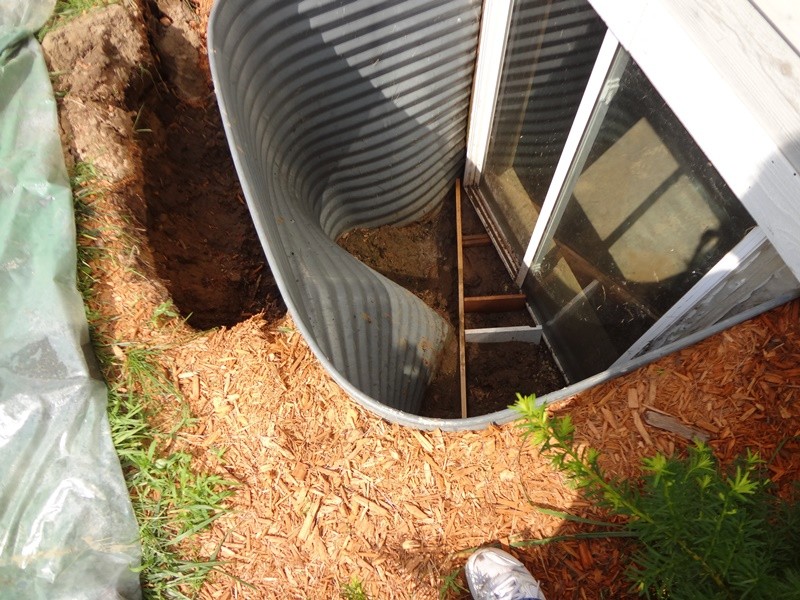
The photo above shows a five-year-old installation that collapsed because the area was never properly compacted. Erosion damaged the well and caused basement flooding, and the well had to be completely replaced.
Why Install a Basement Egress Window Well?

A new egress window does more than satisfy building code. It transforms a dark basement into a bright, usable living space. Here are a few of the biggest benefits:
- Reliable emergency exit for your family and entry point for first responders
- Meets building code for a legal below-grade bedroom
- More natural light and fresh air than standard basement windows
- Added usable square footage and increased market value
Get Started on Your Basement Window Well Project
Installing your own basement window well is a straightforward project that pays off in safety, comfort, and home value. Follow the five steps in this guide, keep up with backfill maintenance, and you will have a finished basement with a reliable escape window that lasts.
Window Well Experts carries window wells, egress windows, covers, ladders, and accessories
for every size and style of home. All of our products ship nationwide. Have questions about your project? Call our team at 1-888-397-8166 for expert help choosing the right setup for your basement.for every size and style.