

Opening a window that’s been closed for weeks or months should let in fresh air. Instead, you slide it open and find dark spots of dirt and mold lining the window track. It happens more often than most people expect, especially on windows that don’t get opened often.
Moldy window tracks are more than an eyesore. Mold releases spores into the air, which can affect your indoor air quality, and according to the CDC, mold in the home can make some people sick. This guide explains why mold forms on window tracks, how to keep condensation under control, and the best way to deep clean dirty window tracks so the problem doesn’t return.
Why Does Mold Form on Window Tracks?
Mold grows in damp, humid spots, and it spreads when moisture is left alone for weeks or months. Window tracks are a common trouble spot because water settles in the channel, and dirt, dust, and pet hair give mold something to grow on. Many sliding windows also have small drainage holes along the track, and when those clog, water has nowhere to go. Do a quick visual inspection on the outside of your windows to be sure the weep holes are not blocked by debris or insects. Use a wooden skewer or other small tool to clean them out if needed.
The two main causes are condensation and small leaks. A slow leak around the window frame can go unnoticed for a long time, and by the time you spot it, mold has already settled into the track. Regular maintenance, like a quick seasonal check of your windows and tracks, is the easiest way to catch leaks early and keep mold under control.
5 Ways to Reduce Condensation
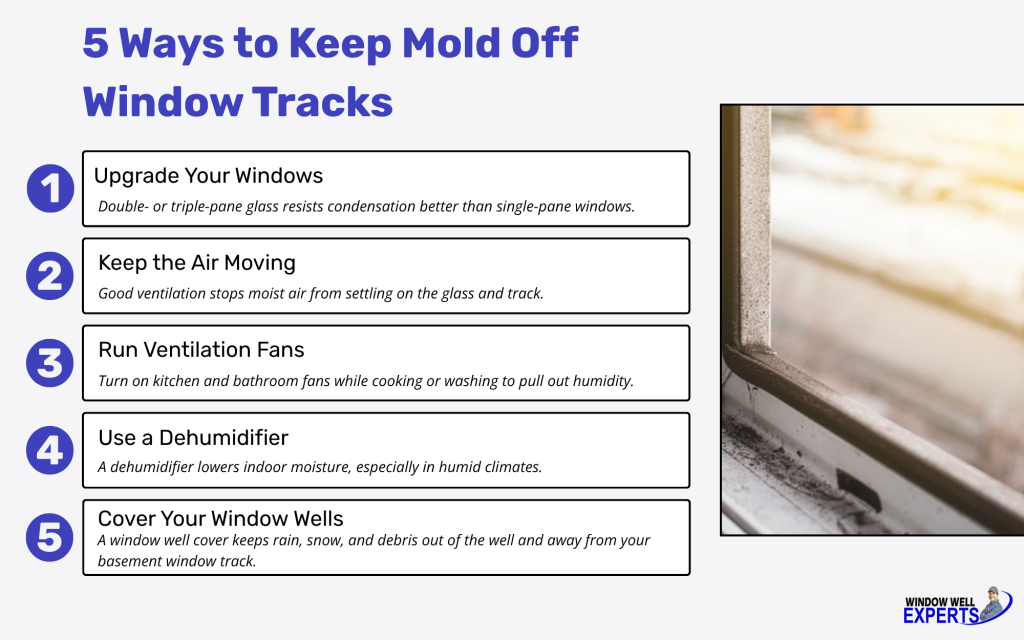
Condensation forms when warm, moist indoor air meets cold glass. Lowering the moisture in the air is the best way to keep it off your windows.
- Upgrade to double- or triple-pane windows: Multi-pane glass resists condensation much better than single-pane windows, where water collects on the cold glass and drips down into the track.
- Keep the air moving: Good ventilation keeps moist air circulating instead of settling on the glass and track.
- Run ventilation fans: Turn on kitchen and bathroom fans while cooking or washing to pull extra humidity out of the room.
- Use a dehumidifier: A dehumidifier helps keep moisture levels down, especially in humid climates. They come in a wide range of sizes, and some models connect directly to an HVAC system.
- Open windows when the weather allows: Letting fresh air in helps lower indoor humidity naturally.

What You Need to Clean Mold From Window Tracks
Having the right tools on hand makes track cleaning faster and more thorough. Before you apply any cleaning solution, clear out the loose debris so the solution can reach the mold directly.
- Remove the window screen so you can reach the entire track.
- Vacuum up loose dust and dirt with a narrow nozzle or brush attachment.
- Loosen stubborn dirt with an old toothbrush or small scrub brush dipped in warm water. For heavier buildup, sprinkle a little baking soda in the track before you scrub.
- Wrap a butter knife in a damp cloth to reach tight spaces and each corner of the track.
- Clear the drainage holes with a cotton swab so water can drain freely.
- Wipe out any remaining dirt with a damp microfiber cloth, then wipe down the window sill. It’s easy to clean window sills at the same time, since dust from the track often lands there.
Once the track is clear, pick one of the cleaning options below. Most of these supplies are probably already in your home, and you only need one method.
|
Supply |
Use |
|
Bleach |
Strong mold killer; use with care around wood |
|
White vinegar |
Milder option, effective on light to moderate mold |
|
Hydrogen peroxide |
Lower odor, less harsh than bleach |
|
Tea tree oil |
Natural option with antibacterial properties |
|
Ready-made mold remover |
No mixing required; follow label directions |
|
Gloves, mask, spray bottle, paper towels |
Protective gear and application tools for any method |
Using Bleach
Bleach has been a go-to mold killer for generations, but it’s strong. Using too much or applying it the wrong way can damage wood frames and tracks, so work carefully.
- Open a window or run a fan to ventilate the room, and put on gloves and a mask.
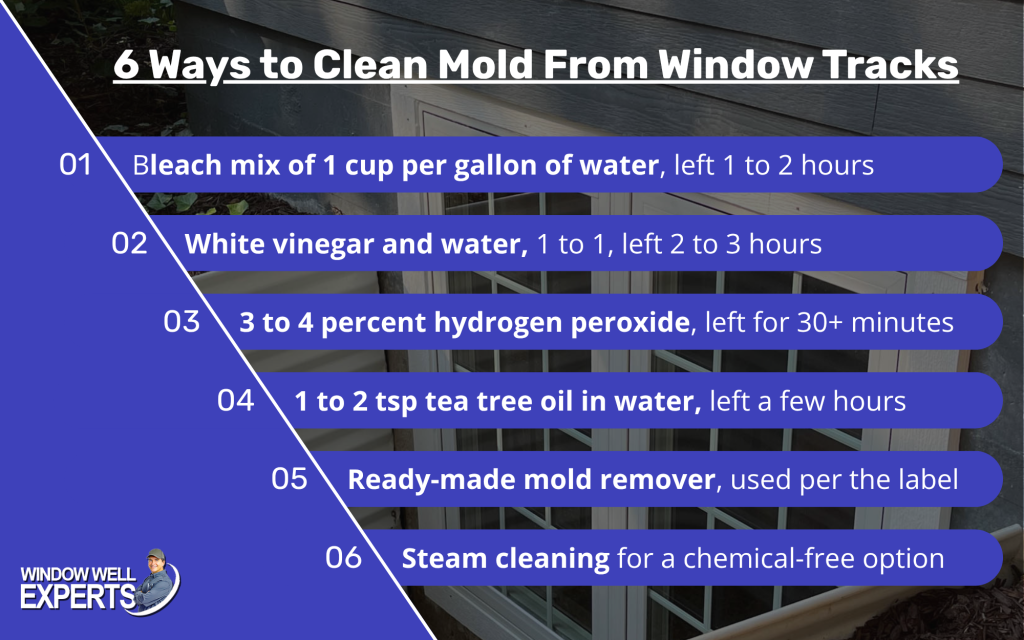
- Mix 1 cup of bleach with 1 gallon of water and pour the solution into a spray bottle.
- Spray the moldy areas of the track and let the solution sit for 1 to 2 hours before wiping.
- Check on it every 5 to 10 minutes, and don’t leave it on longer than necessary.
- Wipe the track with a damp cloth, then finish with a dry cloth.
Never mix bleach with vinegar, ammonia, or other household cleaners, since the combination will release harmful fumes.
Using White Vinegar
White vinegar is a milder option that handles light to moderate mold well. The amount you need depends on how much mold is in the track, but an even mix works for most jobs.
- Dilute 1 cup of white vinegar in 1 cup of water and add it to a spray bottle.
- Spray the track and let the solution sit for 2 to 3 hours.
- Once the area is dry, wipe it clean with a microfiber cloth or paper towel.
- Repeat the process if any mold remains.
Using Hydrogen Peroxide
Hydrogen peroxide is affordable, has very little odor, and is less harsh than bleach. A 3 to 4 percent solution, the strength typically sold in stores, is enough to treat most mold.
- Pour the hydrogen peroxide into a spray bottle and spray it directly onto the track.
- Let it sit for at least 30 minutes. Bubbling is normal and means the peroxide is working.
- Wipe the track with a damp cloth to remove excess moisture. You can also wipe the surface with soapy water afterward.
- Repeat as needed until the mold is gone.
Using Tea Tree Oil
Tea tree oil is a natural option with antibacterial properties and a fresh herbal scent that many people prefer over harsher cleaners.
- Mix 1 to 2 teaspoons of tea tree oil into water in a spray bottle and shake well.
- Spray the solution directly onto the window track.
- Let it sit for a few hours, then wipe away the excess moisture with a damp cloth.
- Repeat if mold is still visible.
Using a Ready-Made Mold Remover
A store-bought mold and mildew remover is a straightforward option for anyone who prefers not to mix their own solution. These products are widely available at hardware and home stores. Follow the label directions closely, and make sure every part of the track gets full coverage so no mold is left behind.
Steam Cleaning as a Chemical-Free Option
If you have chemical sensitivities or simply want to avoid cleaning products, a steam cleaner works well for window tracks. Heat and moisture loosen mold and built-up grime without any added chemicals.
A steam cleaner has a higher upfront cost than a bottle of vinegar or bleach, but it’s a one-time purchase you can use throughout your home, including on a sliding door track, beyond just window tracks. Many models come with attachments that help reach tight spots and narrow channels. Research a few models before buying, follow the manufacturer’s instructions for your unit, and dry the track afterward so moisture doesn’t linger.
Stopping Mold Before It Starts: The Role of Window Well Covers
The cleaning tips above remove the mold you can see, but controlling moisture is what keeps it from coming back. For basement windows, that starts outside with the window well.
An uncovered window well collects rain, snow, leaves, and other debris throughout the year. That water and organic material sit right up against the basement window, where moisture can work its way toward the window frame and track. Over time, a wet, debris-filled well creates the damp conditions mold needs to grow.
A window well cover keeps water and debris out of the well in the first place. With less moisture reaching the window, mold has far fewer chances to take hold on the track. Covers also help keep small animals out of the well while still letting natural light into the basement.
Window Well Experts has supplied window well covers, egress windows, and accessories for over 50 years, serving more than 50,000 customers across the United States and Canada. Every cover is built to your window well’s measurements and ships anywhere in the continental United States. Options include sloped, flat, atrium dome, and metal grate covers, so you can choose the style that suits your well and your basement window.
Why Homeowners Choose Window Well Experts
A mold-free window track protects your indoor air quality and supports smooth operation of the window itself. Pick the method that works best to clean window track buildup in your home, then pair regular cleaning with prevention. Controlling condensation indoors and adding a cover to your basement window wells outdoors keeps moisture away from your windows and stops mold from coming back.
Ready to protect your basement windows? Request a free estimate on a window well cover from Window Well Experts, or call 1-888-650-9355 to talk with an expert. Our team is available 7 days a week.