

Two of the most common types of basement windows used to meet egress requirements are casement windows and slider windows. These are two distinct window styles. Casement windows are hinged on the side and swing open, while slider windows move horizontally along a track. Both can meet egress requirements, but they do it in very different ways. The best choice depends on your basement layout, local building code requirements, and personal preferences.
Picking the right windows matters a lot when renovating your basement. The right window brings in fresh air and natural light while turning a dark, unused area into an inviting living space. But your basement window also needs to meet building code requirements for egress if the space will serve as a bedroom or habitable room.
Egress Window Requirements You Should Know

The International Residential Code (IRC) sets the baseline egress requirements that most states follow, though your local building code may differ. Under IRC Section R310, every basement, habitable attic, and sleeping room must have at least one operable emergency escape and rescue opening, and each bedroom needs its own egress window.
To meet egress code requirements, the window must provide a minimum net clear opening area of 5.7 square feet, a minimum width of 20 inches, a minimum height of 24 inches, and a sill no higher than 44 inches above the finished floor. The window must be operable from the inside without keys or special tools.
Window Well Requirements for Egress Code Compliance
When an egress window sill is below ground level, you also need a window well that projects at least 36 inches out from the window and is wide enough to provide a minimum area of 9 square feet. Wells deeper than 44 inches require a permanently attached egress ladder or steps. Window Well Experts offers complete egress kits sized to meet these code requirements, with covers available in a range of sizes and materials.
What Is a Casement Egress Window?
A casement window is a type of window attached to its frame by hinges on one side. Unlike a double-hung window that slides vertically or a slider window that moves horizontally along a track, a casement window swings open like a door. It can swing either into the room, or open out into the window well. Because the entire sash swings free of the frame, the clear opening is nearly the full size of the window itself.
With a double-hung window or sliding window, only about half the total window area is available as a clear opening because one pane always stays in place. A casement egress window can meet the same egress requirements with a much smaller overall frame, making it a popular choice for homeowners working with limited wall space. Casement egress windows are available in vinyl, wood, and fiberglass to match different home styles and budgets.
Inswing Casement Windows
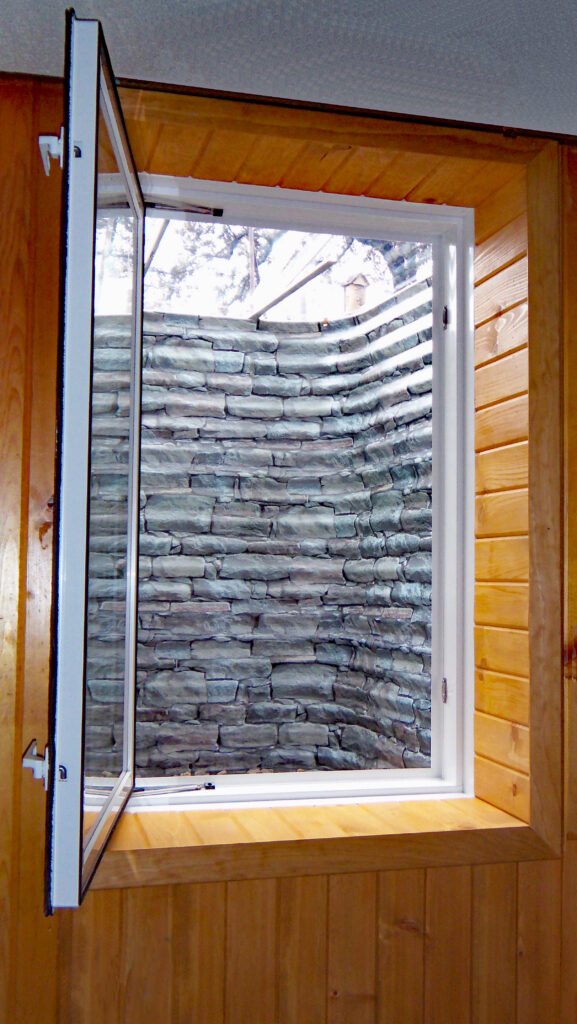
Inswing casement windows are a type of egress window that opens inward into the room rather than cranking outward into the window well. The sash won’t be blocked by snow piling up in the well, and it won’t interfere with landscaping or walkways. This also means booths sides of the window can easily be cleaned from inside of the outside.
The inswing design also improves security because it is harder for someone to force the window open from outside. Since the window swings into the room, take traffic flow into account when deciding on placement. A good floor plan is essential and access to the window should not be blocked by furniture or interior doors in order to be completely egress compliant.
Window Well Experts Inswing Egress Windows
- Meet UBC and IRC code requirements for egress
- Available in a nominal 8-inch width
- Welded white vinyl sash and frame (no painting or rusting)
- White powder-coated release levers with corrosion-proof egress hinge hardware
- Shipped fully braced for poured wall installation; also works as a replacement window
- 3/4-inch insulated Low-E glass for thermal efficiency
- Double-weatherstripped sash to protect against weather infiltration
- Full-size screen removable from the inside
- Reversible header, jamb, and sill parts if poured incorrectly
Pros and Cons of Inswing Casement Windows
Overall, inswing casement windows are one of the most practical egress window options for basements. They check the boxes for ventilation, security, and easy access in an emergency. They are great for smaller rooms where wall space is at a premium.
On the downside, they require interior swing clearance so the sash can open fully, and crank mechanism maintenance may be needed over time depending on the hardware.
Crank-out Casement Windows

Windows that crank out are primarily known as casement windows, which are hinged on the side and swing outward to the left or right, offering excellent ventilation and easy operation. Not all crank-out windows are egress compliant. They are often used for hard-to-reach areas like over a kitchen sink or in an upstairs bedroom or stairway. They offer superior energy efficiency with a tight, compression-seal lock
Casement Crank-Out Egress Windows
- A handle is turned to swing the window outward up to 90 degrees.
- High security due to the locking mechanism being difficult to open from the outside.
- Common in vinyl, wood, and aluminum frames.
- Provides maximum ventilation as the sash opens completely.
- Compared to a slider window, this type of egress window swings completely open for emergency egress.
- A crank-out window will open out into the well, and not impact the room’s layout as much as an inswing window will. However, access to the window is still needed without moving furniture, etc.
- Screens are usually provided by the manufacturer, and are on the inside of the window.
Pros and Cons of Casement/Crank-out Windows
Overall, casement windows are great egress window options for basements. They offer ventilation, security, and easy escape in an emergency. They are an excellent choice for smaller rooms where wall space is at a premium.
They do have a few disadvantages, they require the window well to be clear of debris, ice and snow to open fully. If the window is above grade, specialized window well covers will be needed to keep your window well free from obstructions. Building inspectors may subtract the area behind the open window from the overall window well’s opening, possibly making the well too small for IRC egress compliance. The crank mechanism may also need maintenance over time depending on the hardware.

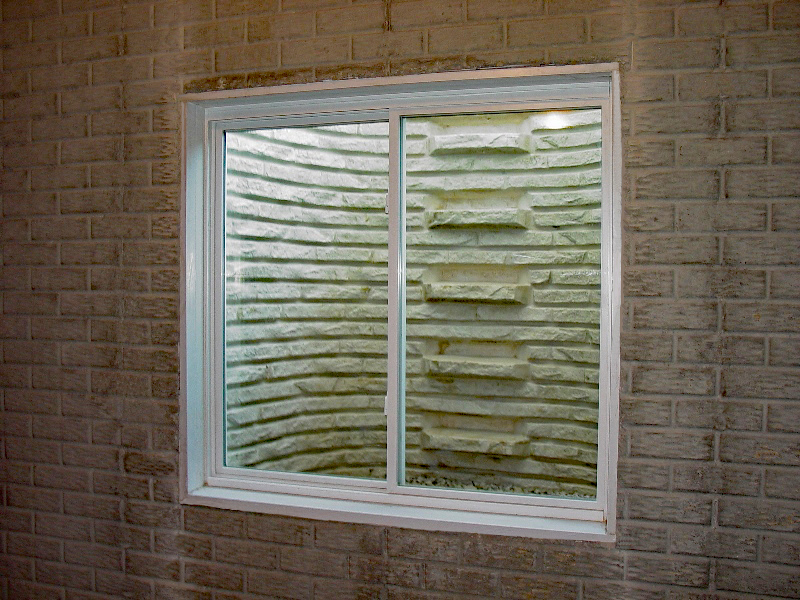
Slider windows, also called horizontal sliding windows, are not casement windows. Instead of swinging open on hinges, they move along a horizontal track, making them a distinct window category and a modern alternative to casement windows for basement egress.
Slider windows, also called horizontal sliding windows, move along a horizontal track, making them a distinct window category and a great alternative to either casement style windows for basement egress.
Because a slider window has panes that overlap on a track, the clear opening is typically about half of the total window size. To meet the same egress requirements as a casement window, a slider generally needs to be about twice as large overall. For homeowners who have the wall space, this can be an advantage because the larger window brings in more natural light.
Slider windows are also low-maintenance with no cranks, hinges, or swing mechanisms to service.
Window Well Experts Sliding Egress Windows
- Meet UBC and IRC codes for egress
- Available in a nominal 8-inch width
- Welded white vinyl sash and frame (no painting or rusting)
- White powder-coated catches
- Both sashes slide on the slider window system
- Shipped fully braced for poured wall installation; also works as a replacement window
- 3/4-inch insulated Low-E glass for thermal efficiency
- Double-weatherstripped sash to protect against weather infiltration
- Full-size screen removable from the inside
- Reversible header, jamb, and sill parts if poured incorrectly
Pros and Cons of Slider Windows
Slider windows offer unobstructed views with a wide, horizontal profile and a modern window style that fits well with contemporary home designs. They are easy to operate with no cranks or hinges, can be cleaned from inside the house, and require no interior or exterior swing clearance.
On the other hand, slider windows have a smaller clear opening relative to their overall size (about half), so they must be larger overall to meet the same egress requirements as a casement window. The track also requires occasional cleaning to keep the window sliding smoothly. Seals between the windows need to be inspected occasionally for wear and tear to keep them weather-tight.
Comparing Inswing Casement, Casement/Crank-out and Sliding Windows
Energy Efficiency and Ventilation
Inswing casement and Casement/Crankout windows create a compression seal against the frame when closed, minimizing air leakage and improving insulation. When open, the full sash allows maximum airflow.
Sliding windows are not typically as airtight because of the track design, but still provide solid energy efficiency with double glazing, Low-E glass, and insulated frames. Generally, only one side of the window opens for fresh air ventilation, the other side is fixed.
Space and Aesthetics
If you prefer a modern look and have plenty of wall space, slider windows work well. Their wide horizontal profile lets in plenty of light, and because they don’t swing in or out, they work in layouts where interior clearance is a concern.
If you prefer a traditional appearance, have ventilation as a top priority, or have a small room, an inswing casement window or a casement/crank-out window offers egress compliance in a smaller sized window with the bonus of an unobstructed view
Egress Compliance
Both window types from Window Well Experts meet UBC and IRC egress code requirements. A casement inswing egress window provides a larger clear opening relative to its frame, meeting requirements with a smaller footprint. A slider needs a bigger frame because only half the window is operable at any given time. Inswing and Slider windows open fully without opening up into the well. For an older home where cutting a larger foundation opening is difficult, either casement window may be the more practical option.
Factors That Affect Your Egress Window Choice
- Bedroom or living space? Any room used for sleeping requires its own egress window.
- Older home or new construction? Homes built before current egress codes may not meet today’s safety standards. Renovations require bringing windows up to current code.
- Window well depth and size: Deeper wells require egress ladders or steps. Window Well Experts carries complete egress kits with properly sized wells.
- Climate: In snowy regions, an inswing casement window avoids the problem of snow blocking an outswing sash or piling against a slider track.
- Budget: Casement windows can often be smaller (and less expensive) than slider windows while meeting the same egress opening. Additional cost may come from the window well size and foundation work.
No matter which window style you choose, proper egress window installation is both a safety feature and a legal requirement for habitable basement spaces. A correctly installed egress window provides an emergency exit, adds natural light, and can increase your home’s value by making basement square feet count as legal living space.
Window Well Experts ships nationwide and offers egress windows, window wells, covers, and accessories to help homeowners meet egress code requirements. Call 1-888-397-8116 to speak with an expert seven days a week.