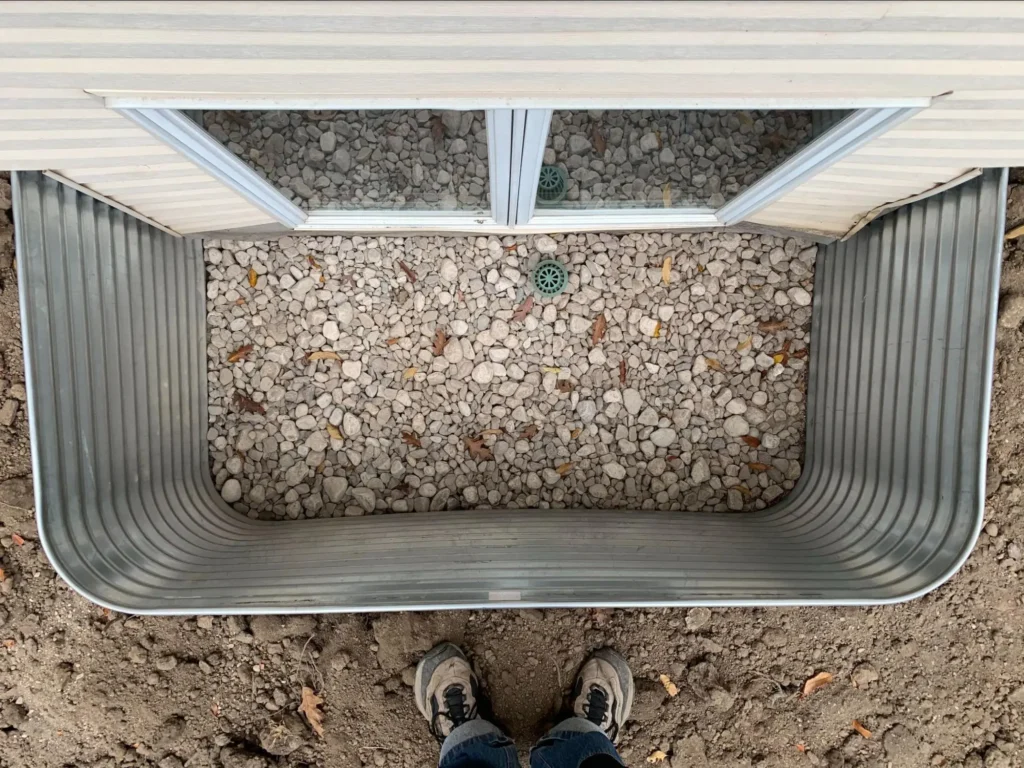
A window well does a lot of quiet work. It pulls natural light into a basement, adds fresh airflow, and helps a lower level feel like a real living space instead of a dark storage room. Then a big storm rolls through, and suddenly your window well is filling with water. Left alone, that water can push through the window, soak the drywall, ruin carpet, and leave you with a musty, flooded basement and a repair bill to match.
Here is the good news: a flooded well is almost always preventable. This guide walks through why basement window wells flood and the simple steps that keep them dry, no matter what the weather throws at you.
Why Your Window Well Keeps Filling With Water
Before you fix anything, it helps to pin down the root cause. Most flooding traces back to one of these five issues.
1. Heavy Rain and Fast Snow Melt
Storms keep getting bigger, and snow can melt fast. A window well can only take so much at once. When the ground is already soaked, the extra water has nowhere to go, so saturated soil builds hydrostatic pressure against the well and the foundation. That pressure then seeks the weakest point, which is often the window frame.
2. Overflowing Gutters
Gutters and downspouts that are clogged will spill over and dump gallons of water right beside your foundation and into the wells below. Two easy checks: step outside with an umbrella during a hard rain and watch for overflow, or run a garden hose through them on a dry day. Greenery sprouting from the gutter is a dead giveaway that something needs attention.
3. Ground That Slopes the Wrong Way
Look at the soil around your foundation. If it slopes toward the house instead of away, every downpour turns into surface water aimed right at your wells. That grading issue sends excess water to the foundation wall, where it pools in the well, where it can cause leaking around the window and pressure on the glass, causing the window to cave into the basement.
4. No Cover on the Well
An open well is an open invitation. Rain, snow, leaves, and the occasional wildlife all drop straight into an uncovered well. Every bit of that debris drifts toward the drain and clogs the gravel. The water that comes with it has one place to go, which is against your basement window. A cover is the single biggest thing standing between a storm and a wet basement.
5. A Clogged or Missing Drain
Many basement window wells installed in the last couple of decades include a built-in drain that ties into the home’s perimeter drain or sump pump. That setup works great until dirt and leaves completely block the drain solid. Once it clogs, water has nowhere to escape and starts climbing toward the window. Wells with no drain at all flood the same way when wet leaves mat together at the bottom and seal off the soil. A blocked drain or clogged gravel is one of the most common reasons a window well keeps filling with water.
How to Stop a Window Well From Flooding
You do not need to become a weekend landscaper to keep your basement dry. These steps, roughly in order of impact, handle the problem for good.
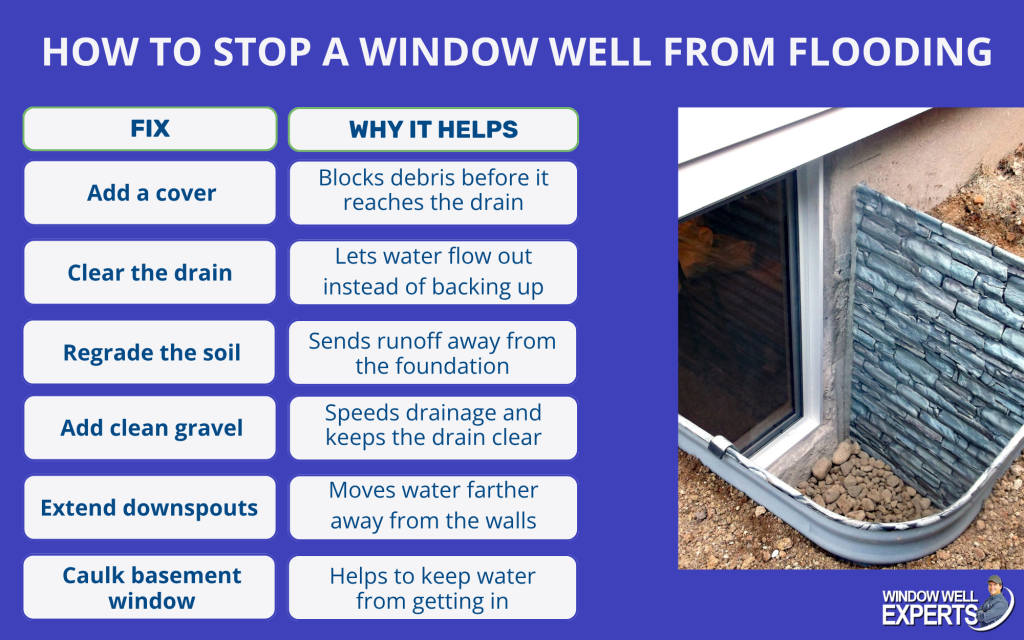
Add a Window Well Cover
This is step one and the least work for the biggest payoff. A quality cover keeps rain, snow, leaves, and animals out of the well so the drain stays clear. If you want to hold on to that natural light, a clear polycarbonate cover, sometimes called a plastic cover, lets the sun through while sealing out the weather. If airflow matters more, a metal grate paired with a top cover keeps the well ventilated and protected. Window Well Experts ships covers nationwide, and every cover carries a lifetime warranty. Browse the full range of window well covers to match your well and window type.
Keep the Drain Clear
If your well has a drain, check it now and then and pull out any debris sitting on top. Once a cover is in place, this becomes close to a one-time job. If a clean well still holds water, lift the drain cover and inspect the pipe underneath. Gently clear any silt or buildup, and go slow near the joints so you do not pull a section of drain pipe apart. For an older or damaged line, a new drain installation that ties into a French drain, weeping tile system, or sump pump can put an end to repeat drainage problems.
Regrade the Soil
Where the lawn slopes toward the house, redirect it by building the soil up so it slopes away from the foundation. This is one of the surest ways to stop water before it ever reaches the well. A shovel and some native soil will do for a small area, or bring in a landscaper for a bigger yard. Firm the soil as you go so it holds its shape through the next storm.
Add a Layer of Clean Gravel
A bed of clean gravel in the base of the well helps water absorb faster and keeps loose dirt away from the drain. Round stones work best because they do not lock together, so water moves through freely. It is a low-cost step with a real payoff and a good one to tackle right after you clear out any trash at the bottom.
Extend Your Downspouts
If your downspouts empty right next to the house, add extensions that carry rainwater at least a few feet out. Getting that water away from the foundation protects the wells and cuts down on erosion at the same time. It is one of the cheapest upgrades on this list.
Check and Refresh the Caulk
While you are redirecting water away from the foundation, inspect the caulk around the basement window and along the point where the window well meets the foundation wall. Cracked, missing, or separated caulk can create an easy path for rainwater to seep behind the well or around the window frame. Remove any loose material, clean and dry the area, then apply a high-quality exterior-grade waterproof sealant rated for masonry and windows. This small maintenance step helps keep water outside where it belongs, especially during heavy rain.
Do Seasonal Check-Ups
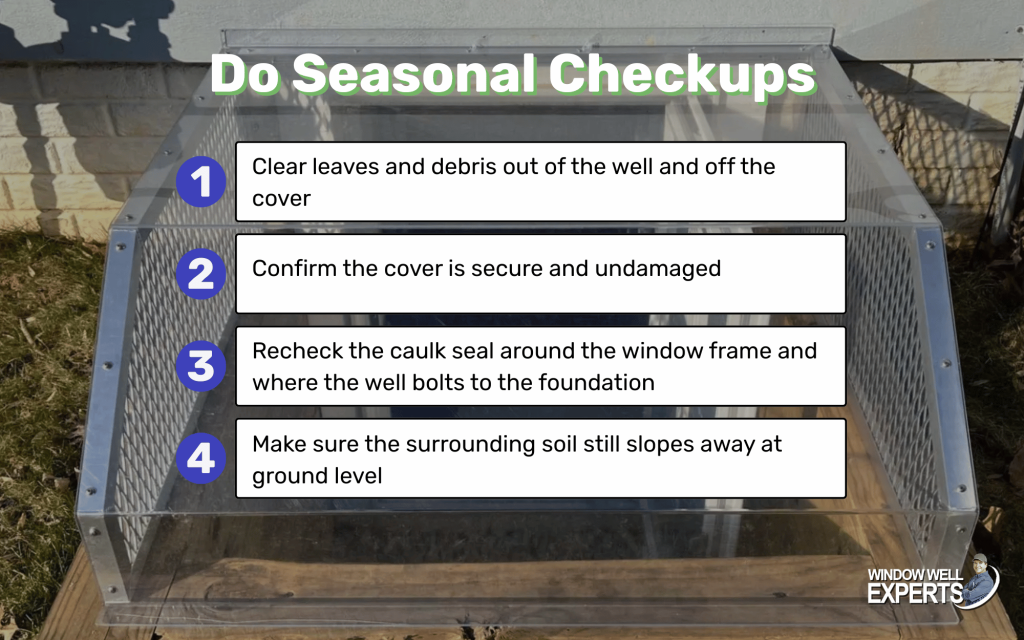
A quick look each spring and fall keeps small issues small. Regular maintenance is the cheapest insurance a basement has. Every few months, clear the leaves and debris out of the well and off the cover, confirm the cover is secure and undamaged, recheck the caulk seal around the window frame and where the well bolts to the foundation, and make sure the surrounding soil still slopes away at ground level.
Keep Your Basement Bright and Dry
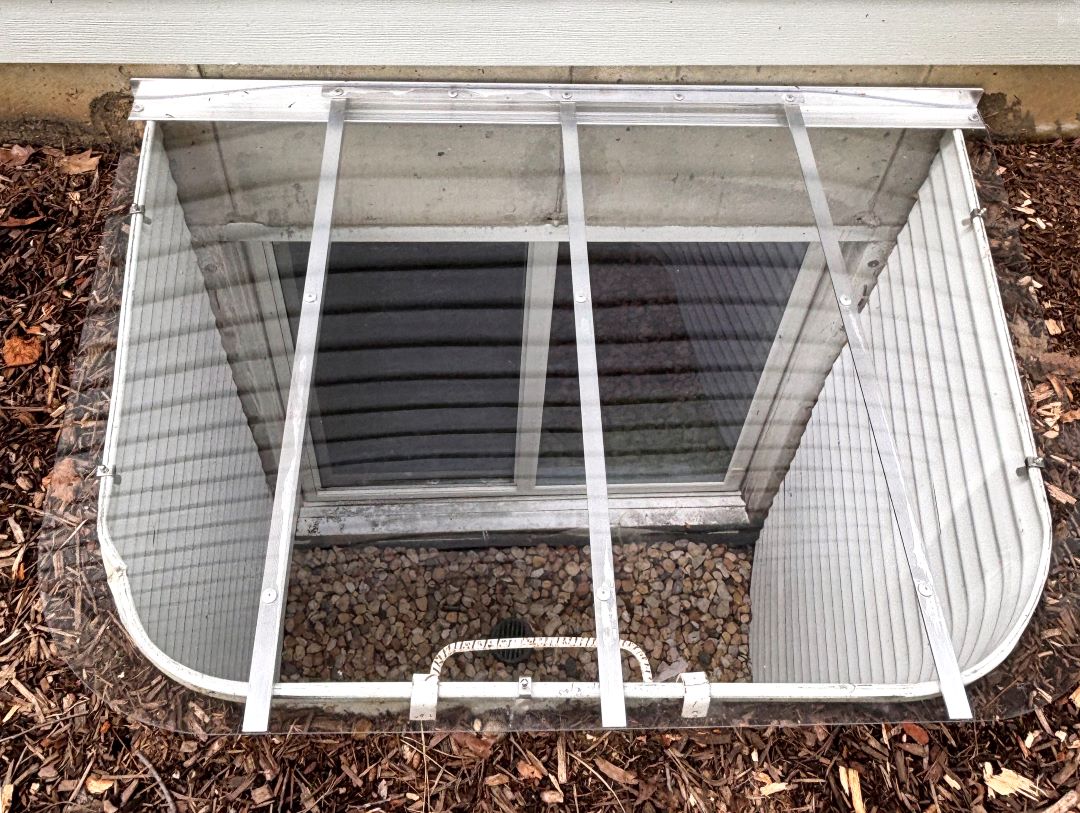
A window well filling with water does not have to be part of your life. A few smart moves, a solid cover, better drainage, and a clear drain keep the space dry through every season. Let it slide, and small leaks can grow into foundation cracks, structural damage, and the kind of foundation repair no homeowner wants to pay for.
Need a cover sized for your exact well? Window Well Experts builds covers that are strong, clear, and made to fit, and they ship across the country to your home or job site. Rain, snow, and flying debris will not stand a chance. Call 1-888-397-7936, or request a free estimate to find the right cover for your basement window wells.
Keep reading: compare styles and materials in our guide to the best window well covers before you buy.